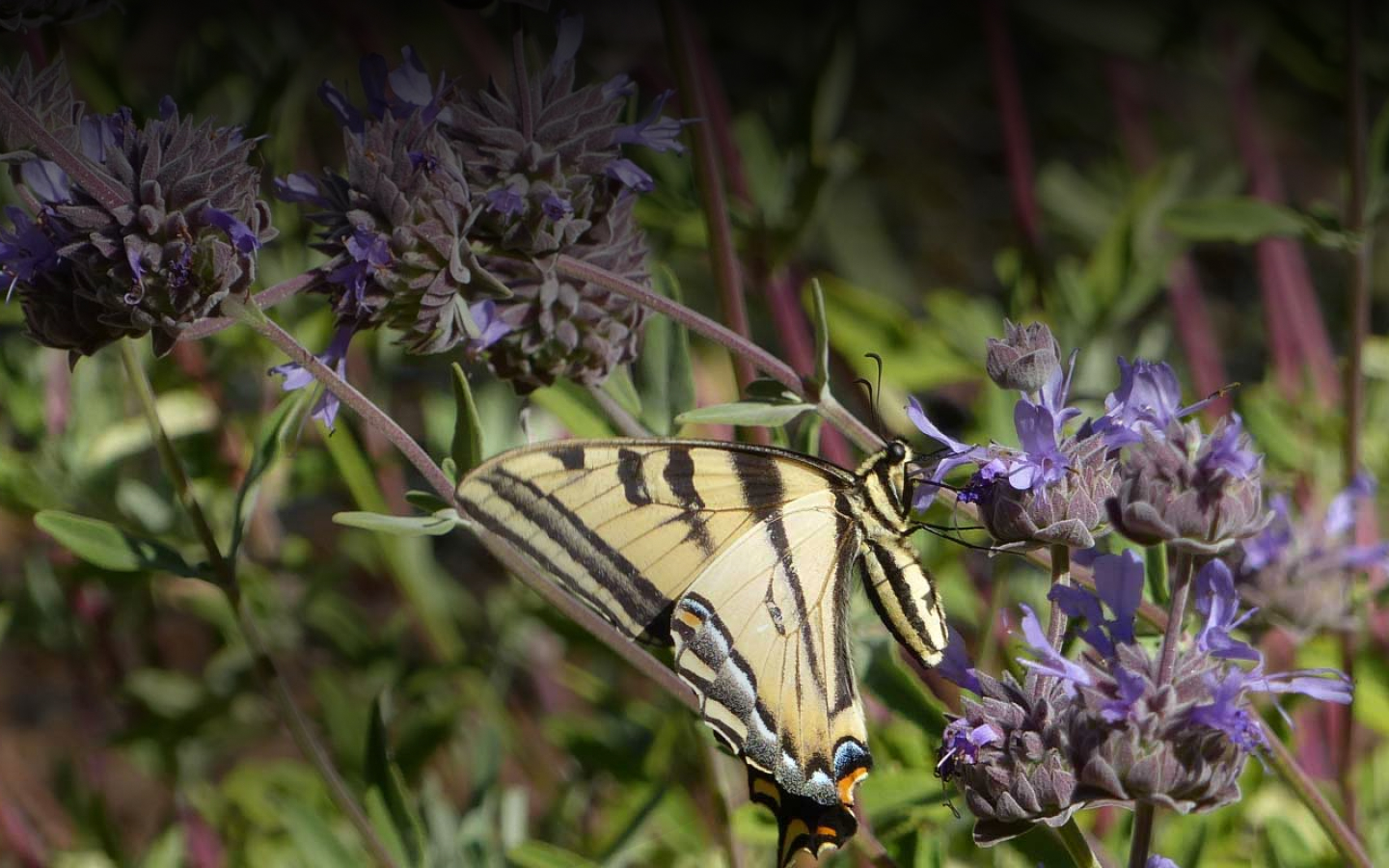

Tips for a thriving wildlife garden
-
Choose plants with different bloom times
Diverse flowering times provide nectar, pollen, and habitat resources for pollinators across multiple seasons. Aim for three or more plant species that bloom in each blooming period—early spring, mid-to-late spring, summer, and early fall. As a bonus, staggered bloom times transform your garden into a dynamic space that changes and evolves with the seasons.
-
Plant in sheltered, sunny spots
Butterflies and other pollinators seek sunny, wind-free areas. Being cold-blooded, they rely on the sun’s warmth so they can fly. Plants in full sun produce more nectar, too, increasing food supply.
-
Vary your flower colors
Different colors of flowers attract different types of pollinators. Bees favor flowers in blue colors. Butterflies and moths look for bright colors to locate nectar, such as red, yellow, orange, pink, and purple.
-
Don’t be too tidy
Allowing your garden to be a bit untidy can actually benefit wildlife. Start with a small area or in the backyard, and leave seed heads for birds, a layer of leaves for critters to enrich the soil, and some bare soil patches for ground-nesting native bees. Pruning in spring rather than fall provides overwintering shelter for birds and insects.
-
Choose locally native plants
Many native insects have specialized relationships with local native plants, meaning they rely on those specific plants for survival. These insects are then the food source for birds and other wildlife that make up our local ecosystem and web of life. By planting native plants, you are providing food and habitat for insects, pollinators, birds, and wildlife.
